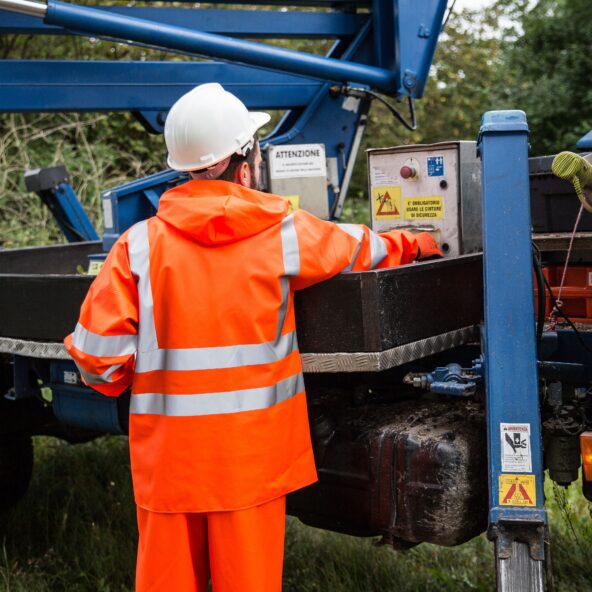
High-visibility workwear is one of the most widely used types of personal protective equipment, but it is also easy to underestimate. A vest, jacket or pair of trousers may look simple, but in the right environment it can be life-saving. Hi-vis helps you stand out clearly from a safe distance, whether you are working on a construction site, a road or the rail network. Fluorescent fabric improves visibility during the day, while reflective strips bounce light back towards the source, helping wearers stand out in headlights and artificial lighting. It is a straightforward form of protection, but it supports one of the most important safety principles: giving people enough time to see, think and react.
Think about the last time you travelled in the dark. Has someone in dark clothing ever seemed to appear from nowhere? In a hazardous workplace, hi-vis helps prevent that scenario by making people easier to spot before an accident happens. Of course, choosing the right garment is only the beginning; looking after it throughout its working life matters just as much.
Health and Safety Executive
The most recent workplace fatality statistics from the HSE show that Great Britain is still making progress and remains one of the safest places in the world to work. There are still serious risks, however. Moving vehicles, moving machinery and other hazards at work still result in avoidable injuries and fatalities. In a busy workplace, the situation can change in seconds. Bad weather, dust, steam, low lighting, reversing vehicles, moving machinery and a cluttered background can all make people difficult to see. When you only have moments to react, spotting someone early can make all the difference. That is why high-visibility workwear deserves attention. It is not simply clothing or a box to tick for compliance; it is part of creating a workplace where people are seen, protected and can go home at the end of the day.
Classes of high-visibility workwear
High-visibility workwear is generally divided into three classes, based on the amount of fluorescent background material and reflective tape used in the garment. Class 1 provides the lowest level of visibility and is suited to lower-risk areas where there are no immediate dangers, such as controlled warehouses or off-road deliveries. An example could be a hi-vis vest with minimal reflective material worn over regular workwear. Class 2 offers medium visibility and is commonly used for roadside construction, traffic management and delivery work. For example, this could be a hi-vis polo shirt with reflective bands at least 50mm wide. Class 3 provides the highest level of visibility and is designed for higher-risk settings, including high-speed roads, rail work and night-time operations where maximum coverage is needed. This could be a reflective full-length sleeve jacket and reflective trousers.
Legal compliance and standards
Under the Health and Safety at Work Act 1974, where visibility is needed to control workplace risk, employers must provide suitable PPE free of charge and make sure it is right for the task. In the UK, hi-vis garments must meet recognised standards such as EN ISO 20471, which sets requirements for colour, reflective material and garment classification. These standards matter because a garment can look suitable but not provide the required protection. Rail environments, for example, have additional requirements. RIS-3279-TOM specifies a particular fluorescent orange colour for the UK rail industry, helping workers stand out against green surroundings and reducing the risk of confusion with rail signals.
The correct colour and standard should therefore be selected through a proper workplace risk assessment, not personal preference. In practice, employers should assess visibility risks, provide PPE that matches the level of risk, keep garments in good condition, train staff on when and how to wear them, and replace workwear when it no longer provides suitable protection.
Materials and durability
Durability matters because hi-vis workwear has to keep performing through rain, mud, repeated washing and long shifts. Common fabrics include polyester and polycotton blends, chosen for strength, colour retention and ability to hold reflective tape securely. When comparing garments, it is worth considering abrasion resistance, UV colourfastness and whether the item is genuinely suitable for the conditions wearers will face. A garment that looks compliant on day one still needs to remain visible, comfortable and practical after months of use.
Sizing and fit for comfort
Workwear only does its job if you wear it properly. A good fit allows freedom of movement, keeps reflective areas visible and reduces the chance of loose fabric snagging on equipment. This is especially important around moving machinery, where ill-fitting clothing can create avoidable risks. As part of our service, Jacksons measures wearers using pre-shrunk workwear so garments are designed to fit properly from the start. Measuring with pre-washed garments helps account for initial shrinkage and gives each wearer comfortable, practical workwear that supports safety rather than getting in the way. We also offer alterations as part of our service, meaning if any extra adjustments need to be made, our expert seamstresses can do it here on site.
Choosing the right colour
Not every bright colour qualifies as compliant high-visibility workwear. For professional use, the recognised fluorescent colours are yellow, orange and red. Each has its place, but the right choice should be based on the working environment, the background colours around the wearer and any industry-specific requirements.
Yellow is widely used because it performs well in many conditions and is easy to spot. Orange is often chosen for rail, highway and roadside work because it contrasts with green surroundings and is often a requirement in rail environments. Red is less common, but it can be useful for specific roles when selected through a proper risk assessment. For example, red hi-vis could be used to identify immediate hazards or specialised roles such as rescue teams.
Colours such as blue or green may look bright, but they are not recognised under EN ISO 20471 as certified high-visibility colours and should not be treated as substitutes. High-visibility workwear needs to be visible, compliant and practical for the environment in which it will be used, not simply eye-catching at first glance.
Maintaining high-visibility workwear
Cleaning and care
High-visibility clothing can become less effective over time. Dirt, fading, damage, worn reflective tape and unsuitable washing methods can all reduce visibility. Garments should always be checked before use and replaced when they no longer provide adequate protection. It helps to think of hi-vis care as a small routine with a big purpose: a quick check before a shift can confirm that the garment is clean, secure and still doing its job to keep you safe.
A managed service such as Jacksons Workwear Rental can help businesses choose suitable garments and keep them safe, clean and ready to wear. We offer industrial laundering tailored to each garment’s specific requirements, expert repairs, and garment traceability, all backed by a knowledgeable and experienced team.
When to replace your workwear
Hi-vis workwear should be replaced when it no longer provides suitable protection or meets the required class rating. Warning signs include faded fabric, cracked or peeling reflective tape, heavy staining, tears, missing fasteners and a poor fit. It should also be reviewed when a wearer changes role or site conditions change. Replacing a garment at the right time is not wasteful; it is a practical part of keeping people safe.
Taking a proactive rather than reactive approach can reduce the risk of non-compliance, build workforce confidence and strengthen safety across the business.
Innovative materials and technologies
Hi-vis workwear is becoming more comfortable, practical and performance-focused. Modern garments increasingly use breathable fabrics, stretch panels, water-resistant finishes and reflective materials that remain effective while allowing better movement. We are also seeing smarter design choices, including improved fits for different body shapes, layered systems for changing weather and materials that balance durability with comfort.
Sustainable practices in workwear manufacturing
Sustainability is becoming an increasingly important part of workwear decisions. As more businesses look for ways to reduce unnecessary waste, workwear rental offers a practical option. Professional laundering, repairs and managed replacement can extend garment life, reduce waste and take pressure off in-house teams. Some manufacturers are also exploring recycled fibres, lower-impact production methods and more responsible supply chains. Put simply, the longer a garment performs well, the more sustainable it can be.
How Jacksons Workwear Rental can help
At Jacksons Workwear Rental, we know that high-quality workwear plays a vital role in workplace safety. Our rental service helps businesses keep their teams visible, comfortable and professional without the upfront cost of buying garments outright.
- A wide choice of high-visibility workwear
- Regular maintenance and laundering to keep garments clean, visible and in good working order
- Flexible terms and support from a friendly, knowledgeable team
Keeping people safe starts with making sure they can be seen. By choosing the right hi-vis clothing, caring for it properly and matching it to the risks of the job, employers can take a practical step towards reducing accidents and protecting their workforce. If you would like support with reliable, comfortable and well-maintained hi-vis workwear, Jacksons Workwear Rental can help keep your team safe, visible and ready for the job. Contact us here.
Written by Anna Ross, Senior Marketing and Sales Development Executive – October 2026