Supporting On-Call Firefighters in the Workplace
At Jacksons Workwear Rental, we’re proud to support employees who go above and beyond both in their professional roles and in serving the community. This includes supporting Ash, one of our on-site engineers who also dedicates his time as an on-call firefighter with Lincolnshire Fire and Rescue. On-call firefighters come from all sorts of backgrounds, ranging from teachers and farmers to administrators and stay-at-home parents. Like Ash, who is an engineer, they juggle their primary job and family life while being ready to respond to emergencies and support their community, whether it’s during the day, in the evening, or on the weekends. According to the National Fire Chiefs Council, on-call firefighters provide emergency cover to over 90% of the UK, highlighting the importance of these roles in the community and why employers should support their employees in taking them on.
Balancing full-time work with on-call firefighting
At Jacksons, Ash is responsible for helping oversee the maintenance and smooth running of our site and the equipment that is essential to our operations. You could find him inside a towel machine, in the boiler room, building walls or really anywhere on site. Outside of his engineering duties, Ash also responds to emergency situations as a trained on-call firefighter. “Becoming a firefighter is something I always wanted to do,” Ash shared. “Once my children were old enough, I knew it was the right time to apply.” Thanks to Jacksons’ support and location just half a mile from Lincoln South Fire Station, Ash is able to respond quickly to emergency call-outs during work hours and be able to make a difference in the community when people need it most.
Lincolnshire Fire and Rescue is made up of 38 stations divided into 3 divisions: West, East, and South. Of these, only nine are staffed by full-time firefighters, meaning the remaining 29 rely on on-call crew members like Ash. Luckily, due to his location, Ash can split his coverage between 2 of these stations. He covers Lincoln South during the day and Waddington Station at night. Proximity is crucial as you only have 5 minutes to get to the station once you receive a call out.
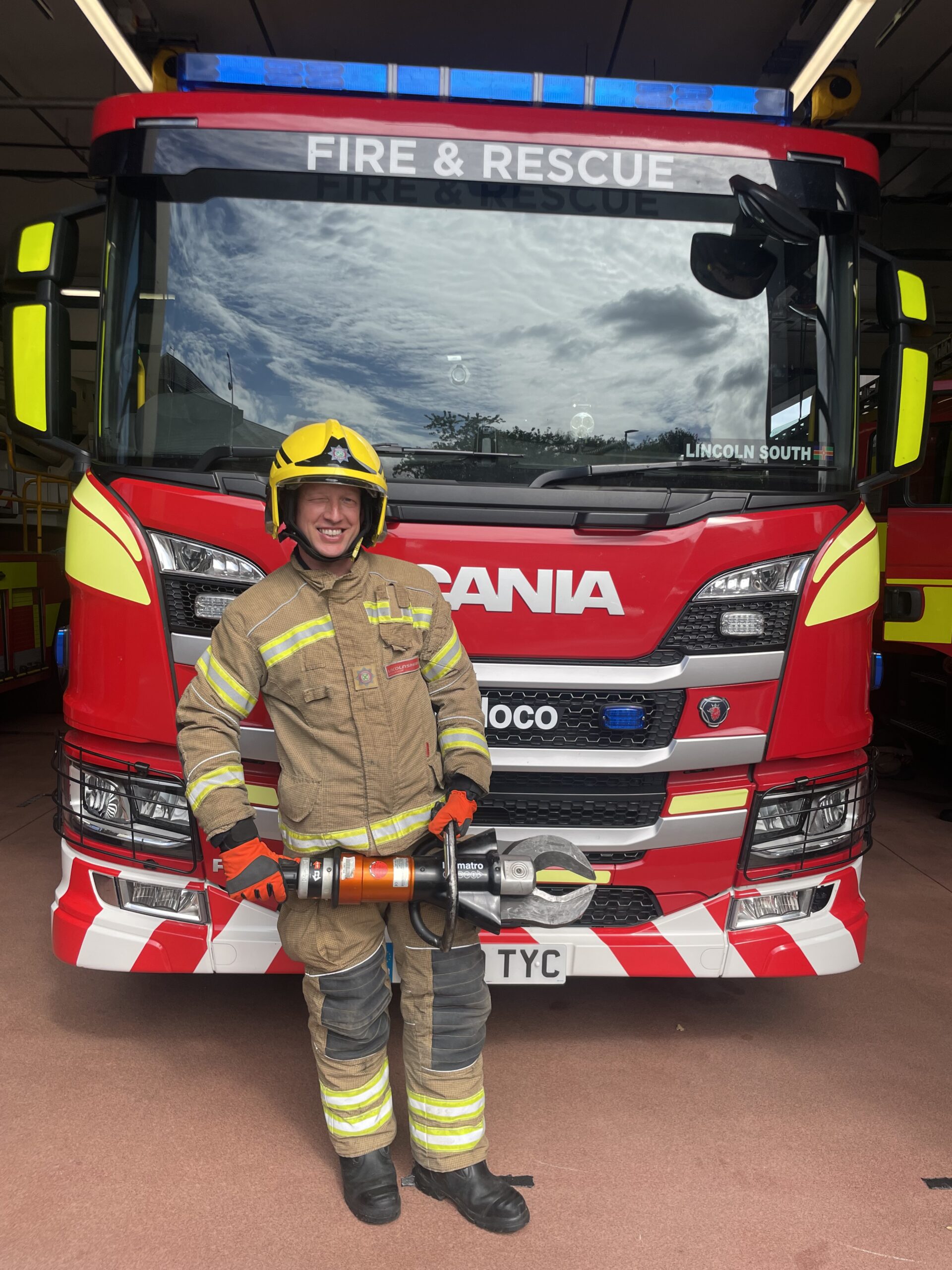
Ash at the fire station.
Training and responsibility
Recently promoted to Crew Manager, Ash leads teams during call-outs and oversees safety, coordination, and decision-making at the scene. “The first thing I do is a dynamic risk assessment and brief the team. I’m also trained to drive two different types of fire engines.”
To operate a fire engine, a minimum of four firefighters is required: a driver, a crew manager, and two crew members. When there aren’t enough people available on call, delays can occur, which highlights again the importance of this role and allowing employees to take it on.
Managing both roles
When on call, Ash carries a pager and uses an app to manage his availability. If the pager goes off, he needs to be at the station in 5 minutes, but if he is needed at work because something has broken down for instance, he can mark himself as unavailable for however long he needs. Clear communication and coordination with your employer is essential here to ensure there is a mutual understanding of when you can leave your primary job for a call-out and when you are needed at work. As on-call firefighters are only deployed during emergencies, most of their time is still spent at their primary job and with proper planning and flexibility, the balance is entirely achievable. When Ash was asked about this, he said: “It is all about flexibility and communication. Jacksons has been very supportive of my role, and they allow me to leave during work hours when there is a call-out. This understanding makes it much easier to balance both roles. I make sure to coordinate with my team at Jacksons and keep them informed about my availability”.
On-call firefighters are compensated with a retainer and an hourly rate for emergencies. They receive 28 days of holiday, and if they need to take time off, they can update the app and let the station know they won’t be available during that period.
Joining the fire service
Becoming an on-call firefighter involves a thorough application and training process, which typically lasts around three months. Applicants must pass a fitness test (Chester Step Test), attend a “Have-a-Go” day, complete job-related physical tasks such as ladder carrying, casualty evacuation and house running, take Maths and English tests, undergo a one-hour interview, and pass a medical and DBS check. Initial training takes place over six weeks, often during evenings and weekends to accommodate full-time work.
Ash encourages others to consider the role: “It’s demanding, but incredibly rewarding. The training is designed to ensure you are well prepared for the job and equips you with skills for life.”
The value to employers
Supporting employees in becoming on-call firefighters is not only a great initiative for the community but it is also beneficial to businesses. Lincolnshire Fire and Rescue rely on the support of on-call firefighters to operate, and having a firefighter on your team means having someone on site who is trained in dealing with traumas, health and safety, and emergency response. And because on-call firefighters operate on standby, they are only called out when needed, meaning that they are usually at their primary job, which takes priority.
The skills Ash has developed as a firefighter, like teamwork, the ability to stay calm under pressure, and decision-making, have made him even more effective in his engineering role here at Jacksons. Likewise, his technical thinking and problem-solving mindset as an engineer benefit him in emergencies. These transferable skills benefit both the community and the company.
Ash is quick to credit Jacksons leadership for enabling him to take on this role. “When I moved from being a driver to an on-site engineering role, Steve (Jacksons Managing Director) actually encouraged me to become an on-call firefighter. I cannot speak highly enough of the support and it’s great to be part of a company that values these kind of community role and understands the impact they have”. And Jacksons support of Ash hasn’t gone unnoticed. During a recent visit to Lincoln South Fire Station, both the Divisional Commander and Deputy Commander thanked the company for its continued flexibility and encouragement. We also heard from Matt King, Head of Response at Lincolnshire Fire and Rescue, who said, “Without the help of community-minded employers like Jacksons Workwear, Lincolnshire Fire and Rescue would find it difficult to get enough on-call staff to provide the emergency support that people across Lincolnshire rely on daily. We really are very grateful for their continued support in Ash’s role as an on-call firefighter at Lincoln South and are glad we were able to show our appreciation.”
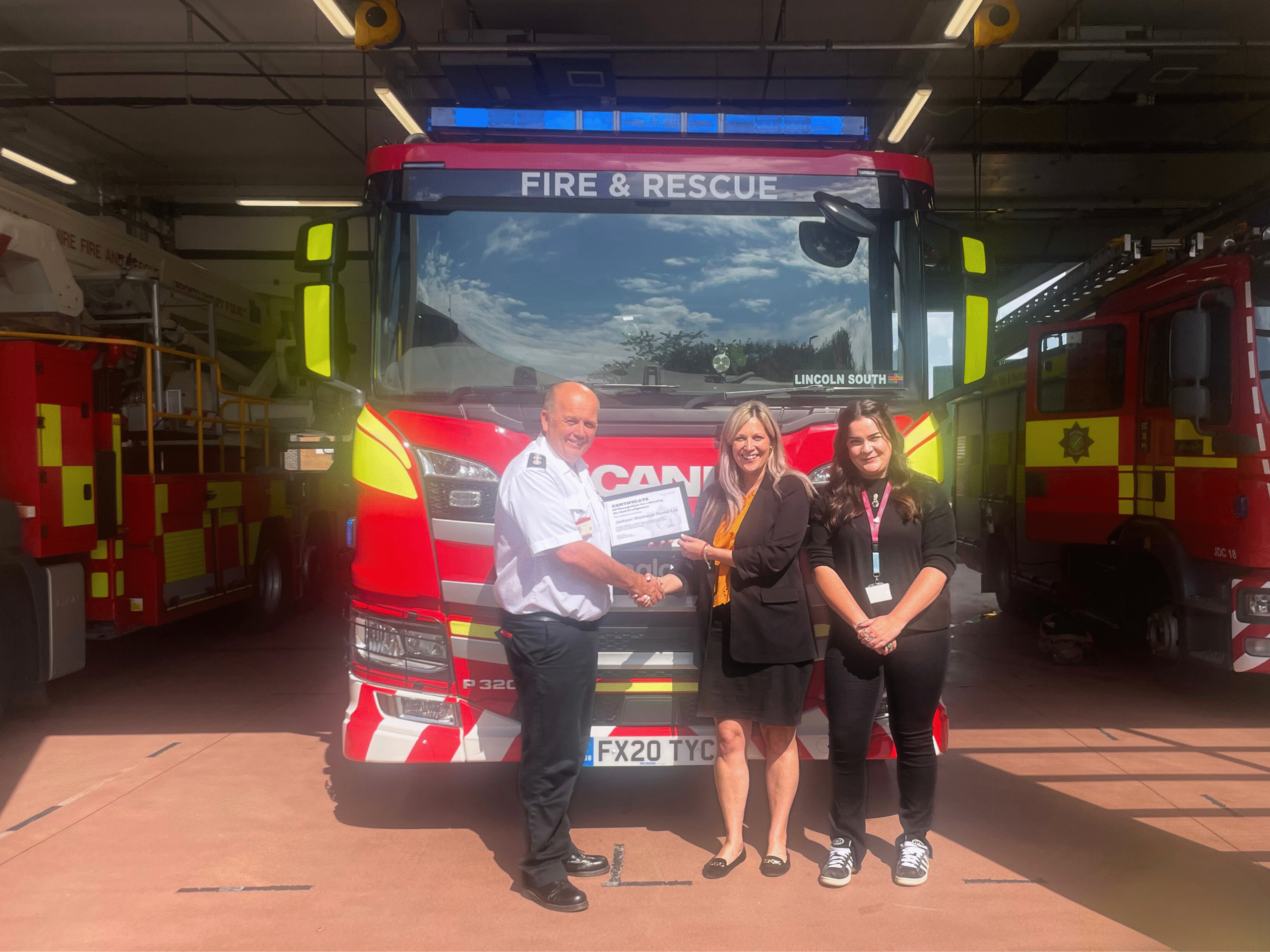
Emma Williams and Anna Ross receiving a certificate of recognition for releasing on-call fire fighters from John Crowder at Lincolnshire Fire and Rescue.
Our visit to Lincoln South Station
We had the exciting opportunity to visit Lincoln South Fire Station with Ash, where we met both the Divisional Commander and Deputy Divisional Commander and got an inside look. It gave us a real appreciation for the vital work Ash and his crew members do everyday.
Our visit began with John Crowder, the Deputy Divisional Commander and Station Manager who walked us through the operations of Lincoln Fire and Rescue. He explained how the team functions and the different responsibilities involved. We then met Helen Gridley, the Divisional Commander, who shared her perspective and talked us through a live drill taking place on site.
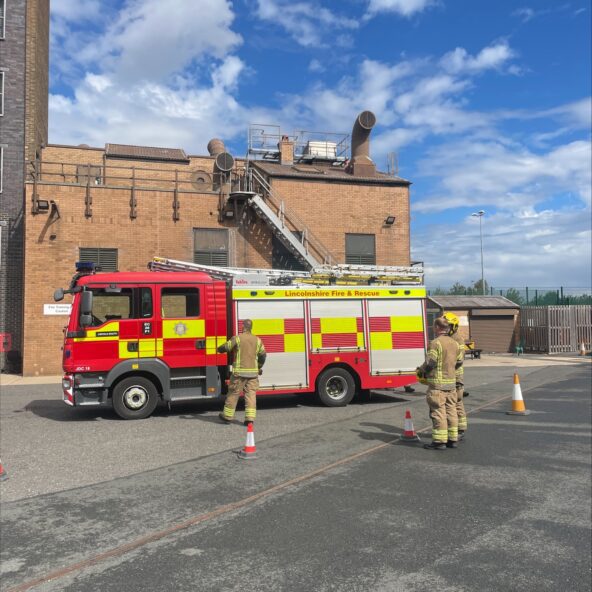
As part of our tour, we watched the team perform a standard combination fire drill, with Ash as crew manager supervising and ensuring everything was done right. It was great to see the professionalism and passion the team brings to their training and their roles. We came away with a deeper understanding and appreciation of what it means to serve as an on-call firefighter.
We were also fascinated to learn about the different equipment carried on each fire engine. Did you know that they even have pet oxygen masks designed for cats and dogs? The type of engine sent to an emergency can vary depending on the equipment needed.
Both Helen and John expressed their gratitude to Jacksons Workwear Rental for supporting Ash in his role as an on-call firefighter. They emphasised the crucial role businesses play when they enable staff to serve in on-call positions, and just how valuable these firefighters are to the service.
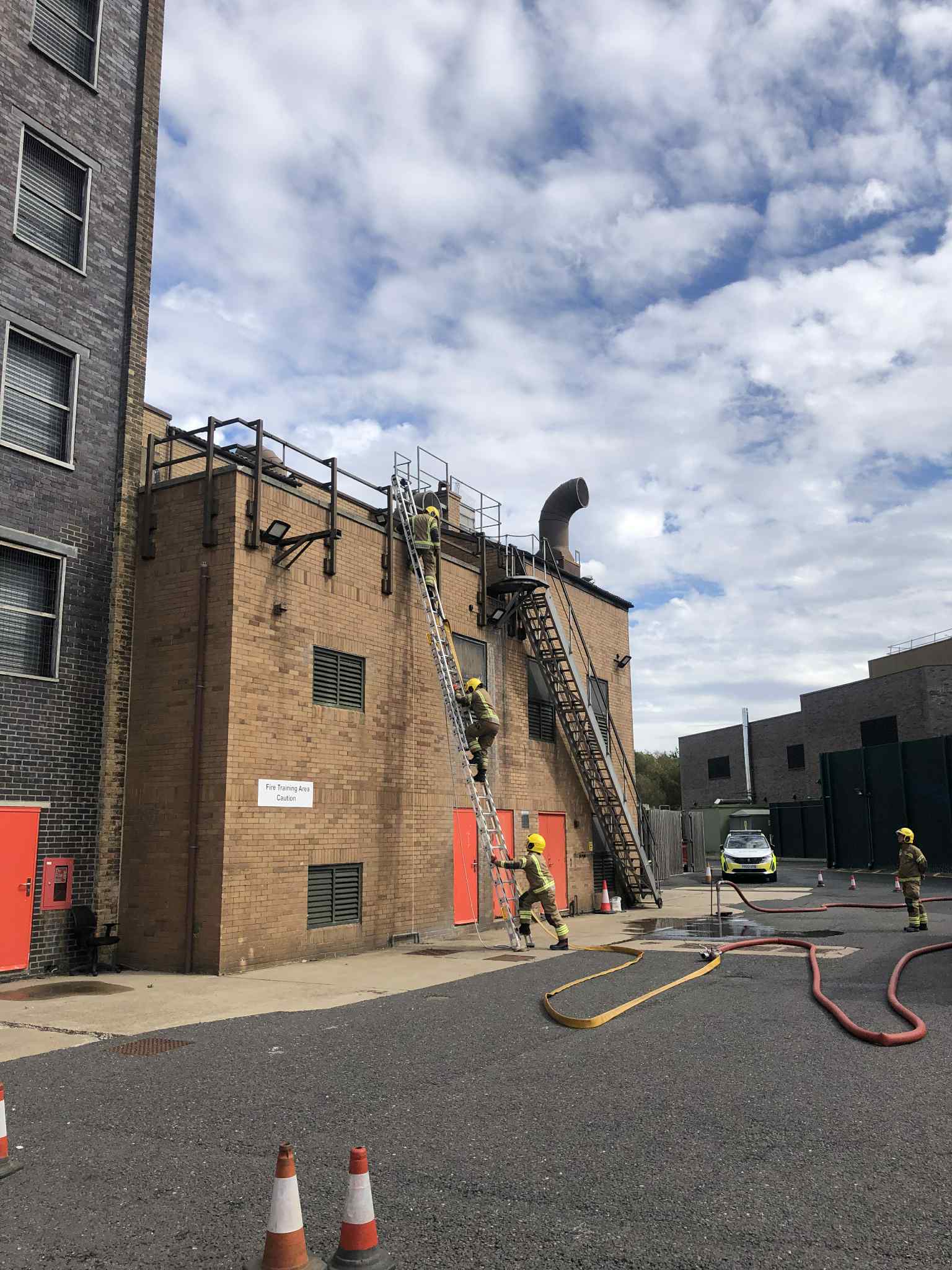
Lincolnshire Fire and Rescue performing a drill test.
Why supporting on-call firefighters makes sense for businesses
Being an on-call firefighter is a vital community service that requires dedication and support from employers. Ash has helped highlight the importance of this role and the positive impact it has on both individuals and the community. Without on-call firefighters, many communities would be left without vital emergency cover, and workplaces would miss out on the invaluable transferable skills that come with hiring an on-call firefighter. You never know when you, or someone you may know, may need them in an emergency.
Supporting on-call firefighters isn’t just about community service; it’s about building a stronger, more capable workforce. By offering flexibility and understanding, companies like Jacksons Workwear Rental show that when employees thrive in their commitments, they bring that same dedication and energy to their professional roles.
We encourage other businesses to consider the benefits of having on-call firefighters on their team and to explore ways to offer flexibility and support. You never know when you, or someone you know, may need them. The value they bring to both their job and the community is immeasurable.